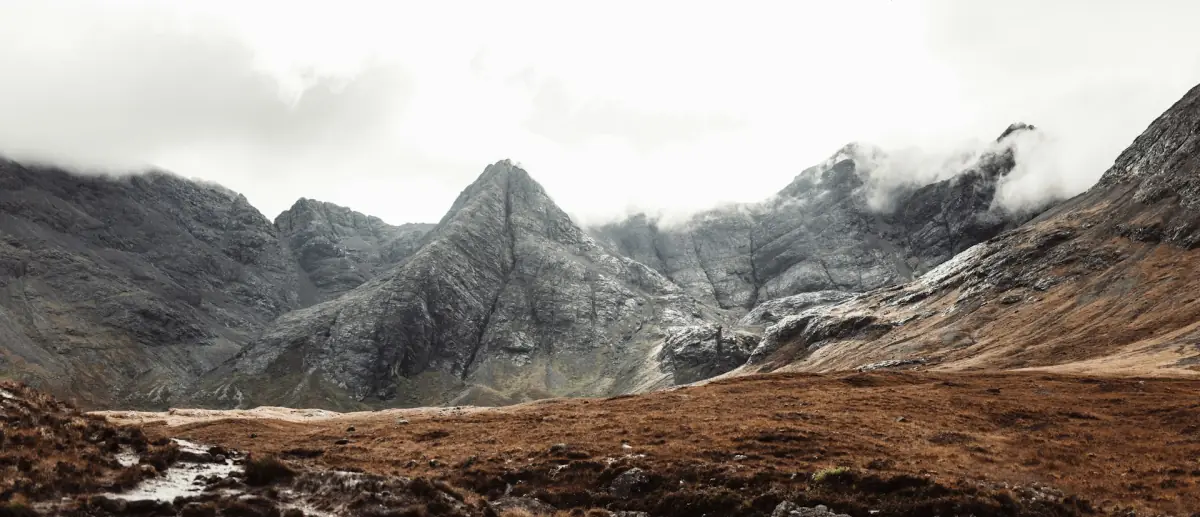
Fairy Pools weather through the year
For a guide to Fairy Pools weather, the Prabost climate averages point to June for less rain and August for warmer afternoons. At Prabost on Skye, the 1991 to 2020 averages put June rainfall at 82.15 mm and August’s daily maximum at 17.09 °C. Those figures describe monthly rainfall and daytime air temperature at Prabost.
May is close to June for average rainfall, at 90.10 mm. By September that figure is 150.49 mm. For a walk beside the rock pools and waterfalls in Glen Brittle, use those differences to choose a season. Use the weather forecast and local warnings to pick the actual day, since conditions below the Cuillin can differ from those at Prabost.
When choosing between spring and autumn, consider how easily the walk can move to another day. If the Fairy Pools are the reason for staying in this part of Skye, leave some room around arrival and departure instead of putting the walk into the only gap in the itinerary.
Traffic and crowds in July and August
The road to the Fairy Pools can be particularly busy in July and August. The final approach into Glen Brittle is single track. Allow time for that last stretch as well as the walk itself. Build some room into the day to come back later if traffic is heavy, especially with a campervan. Keep the approach and parking directions handy so the last turn before Carbost is clear before setting out.
A seasonal Skye day trip
This Portree departure includes a pool walk, with a route that can change in winter.
Hand-picked tours, booked through GetYourGuide. Prices are indicative starting prices in British pounds (as of November 2026). Tap a tour for live availability and the current price in your currency.

Fairy Pools day trip from Portree
The Portree day trip takes 10 hours and plans the Fairy Pools walk towards the end of the route, with the winter itinerary and pool stop subject to conditions.
What time of day to visit the Fairy Pools
An early or later visit to the Fairy Pools gives independent visitors room to adjust around traffic on the Glen Brittle road. Leave enough daylight for the walk and the return to the car park. If there is only time for part of the trail, use the Fairy Pools walking guide to choose a turning point before leaving the road.
The 10-hour day trip from Portree Square includes transport, a driver-guide, live commentary and written digital translations. The planned Fairy Pools walk comes towards the end of the route. Admission to Dunvegan Castle and Gardens is an optional extra, and Neist Point is the planned substitute when the castle is closed. Food and drinks are extra. See the Fairy Pools tours for other departure points.
Winter ice and rain in Glen Brittle
At the Fairy Pools, winter ice can affect the Glen Brittle road, and heavy rain can make the streams and banks hazardous. Check the forecast and heed warnings on arrival. If high water makes the route doubtful, turn back or leave the walk for another day. The winter day trip itinerary and its Fairy Pools stop also depend on conditions.
Look at road conditions and the walking route separately after heavy weather. A road that is passable gives access to the car park, while the conditions by the stream determine how far to walk. Even with footbridges, slick rock, wet grass or mud may make it sensible to turn back before reaching the waterfalls.

Fairy Pools weather and timing questions
Which month is driest near the Fairy Pools?
June has the lowest average monthly rainfall at Prabost on Skye, at 82.15 mm over the 1991 to 2020 climate period. Use that figure to compare months for a Fairy Pools trip, and check the forecast for Glen Brittle before choosing a day to walk.
When is the air warmest on average?
August has the highest average daily maximum air temperature at Prabost, at 17.09 °C over the 1991 to 2020 climate period. For the Fairy Pools, weigh that alongside the summer traffic. Anyone considering getting into the water should read the swimming and safety guide first.
Can the Fairy Pools walk be left until later in the day?
Yes, a later Fairy Pools visit is an option if the approach is busy and there is enough daylight for the walk back. The decision also depends on the weather and local warnings. Keep the visit flexible if heavy rain has made the streams difficult to approach.